empowering leadership, transforming culture
empowering leadership, transforming culture



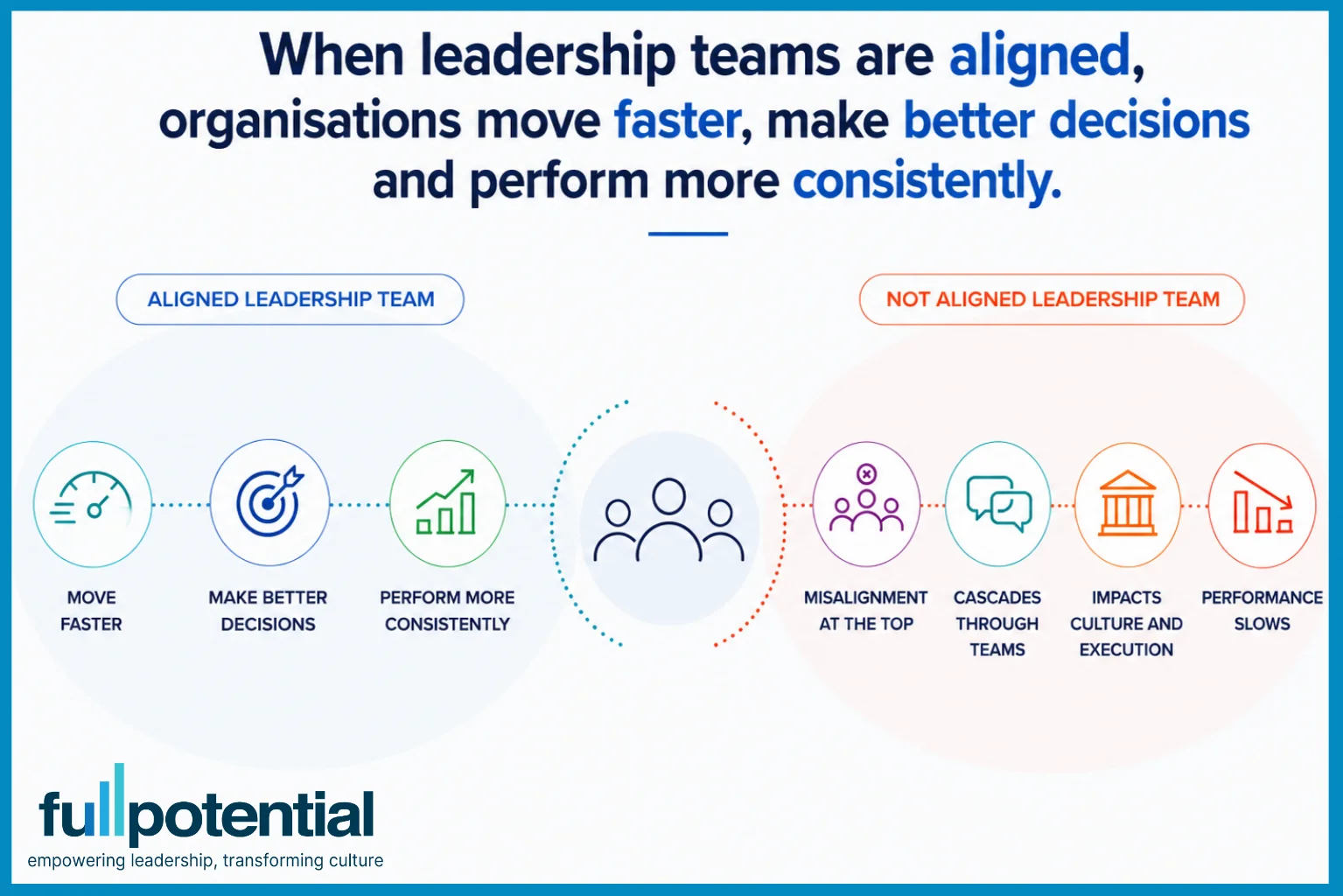
When leadership teams are aligned, organisations move faster, make better decisions and perform more consistently.
When they are not, performance slows, often in ways that are difficult to see at first, but costly overtime. Misalignment at the top does not stay at the top.
It cascades through teams, culture and execution across the organisation.
Leadership teams operate in complex environments, with competing priorities, multiple stakeholders, ambiguity and pressure, and often the need to act before full clarity exists. In this context, alignment is not automatic. It needs to be built intentionally.
Without it, organisations often experience:
These issues rarely come from capability. They come from how the leadership team operates together.
Alignment is not about agreement. It is about:
Aligned leadership teams make decisions more effectively, communicate with clarity and consistency, operate with trust and openness, work as a team rather than as individuals, and create direction others can follow.
You may recognise some of these:
These patterns reduce pace, clarity and organisational performance.
Ensure shared understanding of direction, priorities and success.
Increase pace, confidence and consistency in decision-making.
Reduce competing agendas and focus on what matters most.
Create consistency in messaging across the organisation.
Move from individual ownership to shared responsibility.
Enable constructive debate without damaging trust.
Many leadership teams are made up of strong individuals. But they do not always operate as a team.
• Individual leadership → Collective leadership
• Functional focus → Organisational focus
• Personal accountability → Shared accountability
This is where alignment creates real impact.

• Team effectiveness across the business
• Organisational culture and behaviour
• Communication and clarity
• Execution of strategy
• Employee engagement and trust
If alignment is weak at the top, it becomes inconsistent everywhere else.
• Clear direction and priorities
• Faster decision-making
• Stronger accountability
• Better collaboration across teams
• Greater trust and psychological safety
• More consistent organisational performance
This is what enables sustainable growth.
Build the clarity, trust and ways of working your leadership team needs to move as one.
When leadership team alignment improves, you will see:
• Clearer strategic direction
• Faster, more effective decision-making
• Greater alignment across teams and functions
• Stronger leadership collaboration
• Increased accountability and ownership
• Reduced friction and duplication
• More consistent communication
• Improved organisational performance
Alignment is not a one-off activity. As your organisation evolves, so do:
• Priorities
• Stakeholders
• Pressures
• Complexity
Maintaining alignment requires continuous focus on:
• Clarity
• Communication
• Decision-making
• Trust and challenge
When your leadership team is aligned, your organisation becomes:
• Faster
• Clearer
• More focused
• More effective
Alignment at the top creates performance everywhere else.
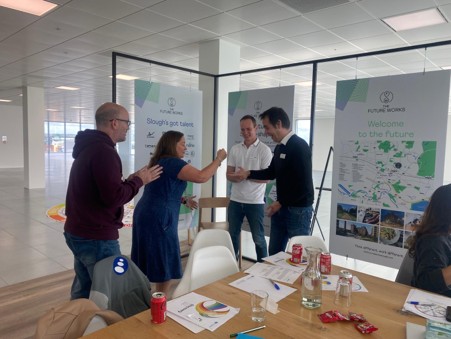
When alignment improves at the top, performance improves everywhere.
Book a Leadership Team Alignment Conversation
If your challenge extends beyond leadership team alignment, explore complementary solutions that strengthen collaboration, team performance and organisational effectiveness.


We have helped unlock the potential in over 1 million individuals, hundreds of teams and more then 2,500 organisations since 1998. These are some of the clients we have partnered with, many of whom have been working with us for years. We are extremely grateful for the recommendations and repeat business we receive.
Don’t just take our word for it though, read some of our client feedback
+44 (0)1628 488990
Contact us+44 (0)1628 488990
Contact us